
U.S. – Mexico Border. Fostering Dignity, Opportunity & Hope. Gil Gillenwater
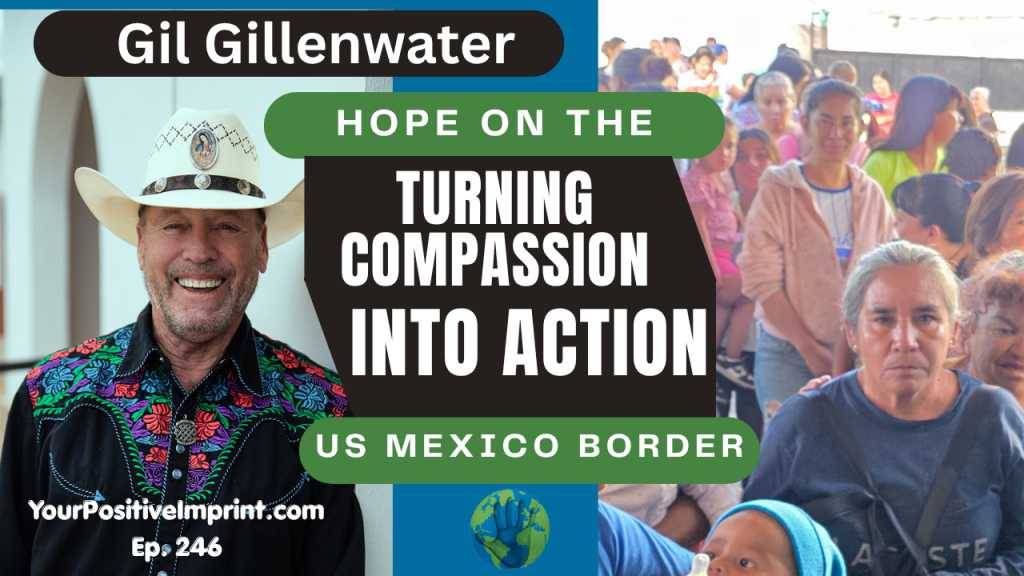
From the Border to the Arizona Trail, Gil Gillenwater lives a life of adventure & service. Founder of Rancho Feliz Charitable Foundation, he shares insights from 40 years of service along the U.S. – Mexico border, emphasizing reciprocal giving, dignity, opportunity, and education for lasting change. His book, “Hope on the Border” highlights the human stories behind immigration, the border and wealth inequality. He introduces “Trail Blazers,” a documentary about his journey with his brother Troy that inspired the Arizona Trail.
Transcript
You are listening to part two, episode 246, Gil Gillenwater,
Catherine:The Truth About the US-Mexico Border
Gil Gillenwater:How do you feed a family and raise a family and educate a
Gil Gillenwater:family and house and clo- on $14 a day?
Gil Gillenwater:It's crazy.
Gil Gillenwater:It's just wrong.
Gil Gillenwater:It's a wealth inequity that, that should not exist, and what I advocate
Gil Gillenwater:is providing people the opportunity to live with dignity in their own country.
Gil Gillenwater:And that way they don't want to immigrate illegally.
Gil Gillenwater:They don't wanna leave their families and their food and their customs.
Gil Gillenwater:They truly don't.
Gil Gillenwater:But the wealth inequity is such that they have to sometimes.
Gil Gillenwater:. Catherine: Hello there.
Gil Gillenwater:I'm Catherine, your host of this Variety show podcast.
Gil Gillenwater:Your positive imprint is transforming how we live today
Gil Gillenwater:for a more sustainable tomorrow through education and information.
Gil Gillenwater:Your own positive actions inspire, change.
Gil Gillenwater:Check out my website, yourpositiveimprint.com, where you
Gil Gillenwater:can learn more about the podcast and sign up for email updates.
Gil Gillenwater:Thank you so much for listening.
Gil Gillenwater:And for your support of this podcast, your positive imprint.
Gil Gillenwater:What's your pi
Gil Gillenwater:Hello, everybody.
Gil Gillenwater:My guest today, Gil Gillenwater, the founder of the Rancho Feliz Charitable
Gil Gillenwater:Foundation, has devoted nearly four decades to empowering communities
Gil Gillenwater:along the United States-Mexico border through what he calls reciprocal
Gil Gillenwater:giving, and we're gonna learn about that reciprocity here in a moment.
Gil Gillenwater:At Rancho Feliz, the focus is on empowering individuals rather than
Gil Gillenwater:simply providing handouts, fostering that dignity and self-sufficiency.
Gil Gillenwater:With millions invested in community development, Rancho Feliz invites you to
Gil Gillenwater:embark on this meaningful journey here with Gil His outstanding volunteerism has
Gil Gillenwater:earned him several prestigious awards, including Arizona's Hon Kachina and
Gil Gillenwater:s Premio a la Filantropía in:Gil Gillenwater:In:Gil Gillenwater:Free the Slaves, aiding Indian villages in their transition from slavery to
Gil Gillenwater:freedom, which garnered global recognition at the Clinton Global Initiative.
Gil Gillenwater:In addition to his philanthropic endeavors, Gillenwater is a black belt in
Gil Gillenwater:Kenpo Karate, and I do not know what Kenpo Karate is, so maybe he will elaborate on
Gil Gillenwater:that, and a certified hot yoga instructor, which we all need for relaxation.
Gil Gillenwater:He is also an enthusiastic outdoorsman, having led wilderness adventures
Gil Gillenwater:worldwide, including expeditions in Tibet.
Gil Gillenwater:Absolutely incredible.
Gil Gillenwater:He has authored his book, Hope on the Border, a firsthand account filled
Gil Gillenwater:with compelling stories about the 2,000-mile United States-Mexico border.
Gil Gillenwater:He highlights the disparities faced by both nations, United States
Gil Gillenwater:and Mexico, and as he described it, "a shared responsibility."
Gil Gillenwater:He is generally, genuinely making a difference - and
Gil Gillenwater:serves as a true changemaker.
Gil Gillenwater:He also, and he'll share this too, has an exciting film which I'm anxious to hear
Gil Gillenwater:also, premiering this year in:Gil Gillenwater:But I wanna share this.
Gil Gillenwater:I love his words, and he's going to share so much with you, but his words
Gil Gillenwater:are, "You think you know the border.
Gil Gillenwater:You're about to learn the truth." Welcome to the show, Gil Gillenwater.
Gil Gillenwater:Catherine, thank you very much.
Gil Gillenwater:It was quite an introduction.
Gil Gillenwater:Yes, it's been a, it's been a rich and full life.
Gil Gillenwater:I'm a very fortunate, very fortunate man that way.
Catherine:Oh, absolutely.
Catherine:And, and I try to keep the introductions down, but it's like, oh my gosh, my
Catherine:guests just have an incredible positive imprint to share that I wanna be sure
Catherine:I get as much in there in case we don't talk about everything, then people can
Catherine:go and learn so much more about you.
Catherine:So again, welcome to the show, Gil.
Gil Gillenwater:Thank you.
Catherine:And so you have this book, and the book is Your experience
Catherine:and, and the title is phenomenal.
Catherine:Hope on the Border What a title.
Gil Gillenwater:Well, you know, I've been doing this for almost
Gil Gillenwater:f- 40 years, and it's just an accumulation of lessons that I have
Gil Gillenwater:learned over that period of time.
Gil Gillenwater:Believe me, I've made my fair share of mistakes.
Gil Gillenwater:And as, as long as I've been on the border, , our cultures
Gil Gillenwater:are very, very different.
Gil Gillenwater:, the Mexican culture and the, and the culture in America, I'm not saying
Gil Gillenwater:one's better than the other or, or any of that, but they are very different
Gil Gillenwater:in how they treat each other and, and h- and there's so many lessons
Gil Gillenwater:we can learn from what they have.
Gil Gillenwater:They can learn lessons from what we have.
Gil Gillenwater:What I've tried to do is compile what I have learned on a lot
Gil Gillenwater:of my, my journeys overseas.
Gil Gillenwater:I spent a lot of time in the Himalayas.
Gil Gillenwater:I spent a lot of time in the hidden lands of Tibet talking with p- pretty
Gil Gillenwater:high level llamas and people like that, and learned a lot about human nature.
Gil Gillenwater:If we wanna, if we wanna motivate people and we wanna get people involved in
Gil Gillenwater:things, we have to know what is our base human nature and how we can satisfy that.
Gil Gillenwater:, and so I've incorporated a lot of that philosophy into the book, and, and
Gil Gillenwater:it, it's, it's kind of interesting.
Gil Gillenwater:I, I do have an- another story if you would, if you'd allow me to tell it.
Gil Gillenwater:Um, is that okay?
Catherine:Oh, absolutely, Gil.
Catherine:Absolutely.
Gil Gillenwater:I ran into a guy named Chokyi Nyima Rinpoche in
Gil Gillenwater:Kathmandu, and, , he gave us an audience, which was a big deal.
Gil Gillenwater:And I think there were five of us, and he signaled us over, and
Gil Gillenwater:there was a table with four chairs.
Gil Gillenwater:And he pointed over and he said, "Well, would you grab that other, uh…"
Gil Gillenwater:And, and I said, "Chair?" And he goes, "Oh, is that what it is?"
Gil Gillenwater:See, I could-- I thought he didn't know the, the, , name in English.
Gil Gillenwater:He says, "Is that what it is?" And I said, "Yeah, it's a chair." And
Gil Gillenwater:he goes, "Well, that's curious.
Gil Gillenwater:What part of it is the chair?
Gil Gillenwater:Is it the, the back?
Gil Gillenwater:Is it the four legs?
Gil Gillenwater:Is it the seat?" I said, "No, no, it, it's, it's everything
Gil Gillenwater:combined, it, it makes it a chair."
Gil Gillenwater:And he says, "So what you're pointing at there is a chair, and it exists
Gil Gillenwater:independently like you do." And I said, "Yes." And I picked it up and I, I
Gil Gillenwater:shook it, and I said, "This is a chair." And I, I knew something was coming up.
Gil Gillenwater:And he goes, "Wow, so it exists on its own." And I said, "Yes." And he
Gil Gillenwater:says, "Well, let me ask you a question.
Gil Gillenwater:Would that chair exist If there wasn't a woodcutter to cut down the wood?
Gil Gillenwater:Hmm.
Gil Gillenwater:And I said, "No, no, you had to…" "So the chair," he says, "is the, the sum
Gil Gillenwater:of the pieces and the woodcutter." And so I knew I was in trouble then, and
Gil Gillenwater:I s- and he says, "Well, how about the mother who gave birth to the woodcutter?
Gil Gillenwater:Would the chair existed…"
Gil Gillenwater:And he went on, "How about the truck that harvested the chair? How about
Gil Gillenwater:the sun that, that, you know, caused the photosynthesis in the tree? How
Gil Gillenwater:about the metal that was mined to make the blade that sawed the wood?"
Gil Gillenwater:And Catherine, it goes out, the chair is connected to everything.
Gil Gillenwater:Mm-hmm.
Gil Gillenwater:We are connected to everything.
Gil Gillenwater:We have this false idea that we exist independently, and we don't.
Gil Gillenwater:Everything I do affects you, everything you do affects me, and the sooner we
Gil Gillenwater:can understand that, the more inclined we're gonna be, uh, to help others,
Gil Gillenwater:because we understand that in helping others, we directly help ourselves.
Catherine:And I think that that's a, a part of, of living that
Catherine:many people don't reflect on or think about or any of the above.
Catherine:Because- Right … you think about your clothing, and this is something I
Catherine:learned from, from people from Australia who were on the podcast, , with Repair
Catherine:Cafe, and they said that people don't honor the one that made their clothes.
Catherine:Lot that goes into it to the creating,
Catherine:Everything behind it, just like the chair.
Catherine:I love that story.
Catherine:So thank you for sharing that.
Catherine:And so now,
Catherine:Sorry, I'm a firefighter and we're, we're getting a call, but I'm not on duty, so
Gil Gillenwater:Okay.
Gil Gillenwater:You're a firefighter.
Gil Gillenwater:I love that.
Catherine:Yeah.
Catherine:I, I'm the chief.
Catherine:Okay.
Catherine:So, um, now, you talk about an invitation to get involved.
Catherine:How do you invite people?
Catherine:How are you getting the volunteers?
Gil Gillenwater:Well, you bring up a good subject there.
Gil Gillenwater:Most of our volunteers are American, - Mexico has developed a very, very
Gil Gillenwater:strong middle class and upper class, of course, and I would like to get Mexicans
Gil Gillenwater:more involved in charitable work.
Gil Gillenwater:So that's a big, that's a big challenge for us.
Gil Gillenwater:But on ours, it's word of mouth.
Gil Gillenwater:One of our, , groups that comes down, and they're typically groups like, um,
Gil Gillenwater:either church groups or, , school groups.
Gil Gillenwater:They come over.
Gil Gillenwater:Mm-hmm.
Gil Gillenwater:And, uh, they come over.
Gil Gillenwater:I have ASU.
Gil Gillenwater:I have University of Arizona.
Gil Gillenwater:We have a r- a lot of religious groups come.
Gil Gillenwater:Um, the one thing I say, "Look, if you come, you're, you're, you're in service.
Gil Gillenwater:You are not here to proselytize.
Gil Gillenwater:If you wanna proselytize, go somewhere else because that's
Gil Gillenwater:just not what we're about." We're not affiliated with any religion.
Gil Gillenwater:We're not affiliated with any, , political group, and that's one thing I really took
Gil Gillenwater:s- strong steps in the book that I wrote.
Gil Gillenwater:Not, we are not politically, , oriented.
Gil Gillenwater:We truly aren't.
Gil Gillenwater:But h- here's the facts.
Gil Gillenwater:Here's what I've witnessed, , you know, when the big asylum thing was going.
Gil Gillenwater:I'm on the border.
Gil Gillenwater:I walk the migrant trails.
Gil Gillenwater:I find the bodies.
Gil Gillenwater:We fund the DNA and are able to tell the, the families that, , "Your uncle's not
Gil Gillenwater:coming back." I mean, it, it's tragic.
Gil Gillenwater:The, the border itself, over 65,000 people have lost their lives on American
Gil Gillenwater:soil trying to get a better life.
Gil Gillenwater:What is that about?
Gil Gillenwater:In the 21st century?
Gil Gillenwater:I tell you, history is not gonna judge us well.
Gil Gillenwater:.. And I like to, in my book, I like to show what the American hand is.
Gil Gillenwater:It's easy to sit up here in our little , palace and say, "Why don't
Gil Gillenwater:those damn Mexicans stay in their own country?" Well, you come down here.
Gil Gillenwater:Let, let me show you the challenges, and then let me show
Gil Gillenwater:you how you're contributing to it.
Gil Gillenwater:Did you realize that out of the 40,000 murders in, in Mexico in I
Gil Gillenwater:think it was:Gil Gillenwater:America or smuggled through America?
Gil Gillenwater:Do you realize that the Maquiladora plants down there where they're
Gil Gillenwater:paying their, their people $14 a day are virtually all American plants?
Gil Gillenwater:Over 3,000 American companies just on the other side of the border so
Gil Gillenwater:that they can build deceptively cheap flat screen TVs so Gil Gillenwater
Gil Gillenwater:can saunter into Costco in Scottsdale and buy a flat screen for 150 bucks.
Gil Gillenwater:And you always say, "Oh, how can it be so cheap?" Well, how it's so cheap
Gil Gillenwater:is you're taking advantage of people.
Gil Gillenwater:You're putting them in indentured servitude at $14 a
Gil Gillenwater:day so you can have a cheap TV.
Gil Gillenwater:We have a big hand in this problem down there, and we need to own that
Gil Gillenwater:and do something about it, in my mind.
Catherine:And I think that's a disconnect is the not knowing.
Gil Gillenwater:Right.
Catherine:What do you do about it if you don't know?
Catherine:And that's where podcasts come in or- Mm-hmm … uh, people go to the
Catherine:library and get books or read and become educated on what truly is happening.
Catherine:Your words, and I will say it again, you think you know the border.
Catherine:Well, you're about to learn the truth.
Catherine:That's key, trying to connect people to what is happening.
Gil Gillenwater:Mm-hmm.
Catherine:And there's a disconnect, and-
Catherine:Yeah.
Catherine:Right.
Catherine:So… True.
Gil Gillenwater:You, you've said it very, very well, better than I could actually.
Gil Gillenwater:But the not knowing is another way of, of saying ignorance.
Gil Gillenwater:And, , if we're gonna speak to, uh, the border situation, I mean, it's our
Gil Gillenwater:southern border, it's very close to all of us, and we look in our nation
Gil Gillenwater:what's going on right now and, and some of the things that are happening.
Gil Gillenwater:I'm hoping that people, by reading this book, will get a better
Gil Gillenwater:understanding of why this is happening, why that's happening.
Gil Gillenwater:, between:Gil Gillenwater:into our country we didn't know.
Gil Gillenwater:I was there.
Gil Gillenwater:I s- I talked to the guys from Senegal.
Gil Gillenwater:I talked to the guys from the Congo.
Gil Gillenwater:It's crazy.
Gil Gillenwater:I got photographs of thousands of them, just came across the border, and
Gil Gillenwater:they were put in, in unmarked buses.
Gil Gillenwater:They were taken to hotels in Phoenix and Tucson that you couldn't get
Gil Gillenwater:into, so it was a real effort to hide it from the American people.
Gil Gillenwater:I talk about these things, but how can you have a sovereign country when
Gil Gillenwater:we don't know who the people are, we don't know what their background is?
Gil Gillenwater:I mean, I don't know w- I don't know what the motivation for that was, but
Gil Gillenwater:to me it was, uh It was treasonous.
Gil Gillenwater:It, it, you don't… If you're a sovereign country, you can't allow
Gil Gillenwater:people in who you don't know who they are, especially 13 million.
Gil Gillenwater:And Catherine, the book has some solutions.
Gil Gillenwater:I don't just point out problems.
Gil Gillenwater:Anybody can point out problems.
Gil Gillenwater:Here's what you do.
Gil Gillenwater:They say now we've got about 21 million illegals living and
Gil Gillenwater:working in the United States.
Gil Gillenwater:Well, first of all, our border policy's broken.
Gil Gillenwater:If you j- Mm-hmm … if, even if you went through the correct
Gil Gillenwater:channels, it'd take you 12 to 15 years to w- to wade through that.
Gil Gillenwater:It's broken.
Gil Gillenwater:We need a policy, and here, here's what I'm, here's what a, one of
Gil Gillenwater:the things I would pro- propose.
Gil Gillenwater:In:Gil Gillenwater:men were gonna go to war.
Gil Gillenwater:We needed somebody to pick the lettuce.
Gil Gillenwater:We went down into Mexico, and we brought up five million Mexicans to do
Gil Gillenwater:those jobs while our men were at war.
Gil Gillenwater:We vetted them.
Gil Gillenwater:We found out they weren't criminals.
Gil Gillenwater:We taxed them, so they weren't a drain on the system, and we let them work,
Gil Gillenwater:and we let them go home for Christmas or whenever they wanted to go home.
Gil Gillenwater:Where's the mystery in that?
Gil Gillenwater:We're aging out.
Gil Gillenwater:We need immigrants.
Gil Gillenwater:W- uh, our culture, our median a- , age now in America is 40, and it's a
Gil Gillenwater:decade younger than that in Mexico.
Gil Gillenwater:We need young workers in the United States.
Gil Gillenwater:So why can't we?
Gil Gillenwater:Why can't we give them a path to citizenship?
Gil Gillenwater:Vet them, let them work, and even the ones that are here already, let's try this on.
Gil Gillenwater:Again, I'm a big advocate of knowing who people are.
Gil Gillenwater:Vet 'em.
Gil Gillenwater:Make sure they're not criminals.
Gil Gillenwater:If they're not criminals and they're living here, say, "Okay, you have
Gil Gillenwater:to sign a document that says you broke the law 'cause you did."
Gil Gillenwater:And there's a certain segment of our society that's very important
Gil Gillenwater:that they acknowledge it.
Gil Gillenwater:It doesn't go on your cr- uh, record.
Gil Gillenwater:It's not a criminal offense, but you admit that you broke the law.
Gil Gillenwater:And then you are charged a $10,000 fine and you're given 10 years to pay it back.
Gil Gillenwater:Multiply 10,000 times 21 million.
Gil Gillenwater:It's a huge amount of money.
Gil Gillenwater:There's not a single illegal immigrant who wouldn't jump at the chance to pay
Gil Gillenwater:10,000 'cause that's about the same amount they paid the smuggler to get in here.
Gil Gillenwater:You give them 10 years to pay it, and that's their path to citizenship.
Gil Gillenwater:We've got to address this.
Gil Gillenwater:They call it the golden cage.
Gil Gillenwater:Can you imagine living and working in America if you weren't legal, never
Gil Gillenwater:knowing if you just drive to the store if you're gonna get pulled over,
Gil Gillenwater:jerked out of your car and deported?
Gil Gillenwater:What a horrible way to live.
Gil Gillenwater:We shouldn't make people do that.
Gil Gillenwater:We need to have a path.
Gil Gillenwater:Unfortunately, to me, it appears as though our politicians are more
Gil Gillenwater:interested in maintaining their power base than doing what's right for the
Gil Gillenwater:citizens and what's right for humanity.
Gil Gillenwater:What's w- what we're doing to people right now is wrong.
Gil Gillenwater:I w- I've been there.
Gil Gillenwater:I see these mothers.
Gil Gillenwater:They have their baby.
Gil Gillenwater:They've made it through the Darién Gap and they've gotten all the way up
Gil Gillenwater:here because they were told they could declare asylum and they get here and
Gil Gillenwater:we say, "Oh, we changed our minds.
Gil Gillenwater:We're gonna deport you back to Haiti now." Oh, it, it's, it's
Gil Gillenwater:just, it's, it's a human travesty.
Catherine:And-
Gil Gillenwater:Excuse me.
Gil Gillenwater:I, I get, I kinda get wound up on it.
Catherine:Well, this is what you've been doing for over 40 years.
Gil Gillenwater:Well, they're human beings.
Gil Gillenwater:They're, they're, they're just like you.
Gil Gillenwater:They have hopes, dreams like you and I do.
Gil Gillenwater:They have vulnerabilities.
Gil Gillenwater:They watch the sun come up.
Gil Gillenwater:They watch the moon.
Gil Gillenwater:We're, we're all the same.
Gil Gillenwater:Just by blind luck, I get to sit up here and they have to be down there.
Gil Gillenwater:And once that really sinks in, you just… That, that's just not right.
Gil Gillenwater:It's just not fair.
Catherine:I wanna read something to you so this is from a guest.
Catherine:I like to quote my guests because that's what I do.
Catherine:Yep.
Catherine:I have positive imprints.
Catherine:So he says,
Catherine:. "One planet, one people, oneness for humanity." That's pretty deep,
Catherine:and that's exactly what you're saying, and that's what your book
Catherine:is definitely trying to bring out,
Gil Gillenwater:Absolutely.
Gil Gillenwater:Absolutely it is.
Gil Gillenwater:I think they call that the overview effect, and, and it's when
Gil Gillenwater:astronauts go up and they see plant- planet Earth from far away, they
Gil Gillenwater:realize how we are all connected.
Gil Gillenwater:We're all… And it's such a fragile existence, and we need
Gil Gillenwater:to take care of each other.
Gil Gillenwater:I always think of two guys on a ship, a sinking ship, and they're fighting over
Gil Gillenwater:who's gonna get to drive it instead of fixing the leak, and the, the ship sinks.
Gil Gillenwater:That's kinda what we're doing here.
Gil Gillenwater:We need to take care of this planet.
Gil Gillenwater:We need to take care of each other.
Gil Gillenwater:Mm-hmm.
Gil Gillenwater:Mm-hmm.
Gil Gillenwater:There's pl- w- it's an abundant world.
Gil Gillenwater:There's plenty of resources.
Gil Gillenwater:That's not the problem.
Gil Gillenwater:It's the mind.
Gil Gillenwater:It's the human mind.
Catherine:You said it so well, fragile existence.
Catherine:And that, and that's everything, our wildlife, exactly what you
Catherine:said, nature, people, everything.
Catherine:, Gil Gillenwater: I wanna give one other example about this wealth inequity,
Catherine:because wealth inequity is, is a good sign of a social collapse, a societal collapse.
Catherine:The average price home in Scottsdale right now is $850,000.
Catherine:Oh my.
Catherine:It's nuts.
Catherine:, but here's, here's an example.
Catherine:Our high school scholarships cost $300 a year, okay?
Catherine:Do you know what Americans spent last year on pet clothing?
Catherine:Take a guess.
Catherine:Each individual or total?
Gil Gillenwater:Total
Catherine:Hmm.
Catherine:I guess in United States, I would have to say maybe 300,000.
Catherine:I bet it's more than that.
Catherine:Oh my gosh.
Gil Gillenwater:Five.
Gil Gillenwater:Get ready, Catherine.
Gil Gillenwater:It's $5 billion we spent on- Oh … pet clothing last year.
Gil Gillenwater:At $300 a year education, we could pay for 17 million years of
Gil Gillenwater:high school education for what we spent in one year on pet clothing.
Gil Gillenwater:It's a culture, it's a society out of whack.
Gil Gillenwater:We need to…
Gil Gillenwater:Why can't we take care of people first and then get our cat a sweater?
Gil Gillenwater:I mean, come on.
Gil Gillenwater:It's just an example of how, uh, how out of balance we are as a species.
Catherine:Yeah.
Catherine:Interesting.
Catherine:And, and there is a lot that we all have to work on.
Catherine:We were in Europe.
Catherine:Czech Republic, you know, they don't get paid very much.
Catherine:They're still a poor country.
Catherine:They haven't had the wall down for that long, just- Mm-hmm … 19… What was it?
Catherine:,:Gil Gillenwater:Yeah.
Catherine:Uh, uh, just- Yeah … you were talking about that in the beginning,
Catherine:just the happiness of, of working and the dignity, and I think that's a- Yes
Catherine:a big difference is the dignity.
Gil Gillenwater:I think you're right, and isn't it interesting
Gil Gillenwater:in that world happiness report America was ranked number 62?
Gil Gillenwater:Mexico was ranked number 25.
Gil Gillenwater:So here you have all these people in a happier country trying desperately
Gil Gillenwater:to get into an unhappier country.
Gil Gillenwater:And I-- my contention is it's the almighty dollar.
Gil Gillenwater:You know, we are all so motivated by money, and that's what, uh, capitalism
Gil Gillenwater:in the United States, uh, represents.
Gil Gillenwater:So it, it, it… But it definitely shows you that's not the route to, to a
Gil Gillenwater:happy and productive, meaningful life.
Catherine:Yeah.
Catherine:So, uh, okay.
Catherine:So let's go to Tibet and-
Gil Gillenwater:Yes
Gil Gillenwater:… Catherine: there.
Gil Gillenwater:So first of all, you have the statue next to you.
Gil Gillenwater:Yes.
Gil Gillenwater:Buddha.
Gil Gillenwater:It's- I'm not a Buddhist, but I'll tell you what, I love the teachings.
Gil Gillenwater:I do.
Gil Gillenwater:Mm-hmm.
Gil Gillenwater:I think, uh, to me Buddhism is not a religion, it's a science of the mind.
Gil Gillenwater:It's how we think, why we think, and, and what we can do to, uh, offset
Gil Gillenwater:some of the feedback that we get.
Gil Gillenwater:You know, our mind isn't always our friend.
Catherine:And so I see Our Lady of Guadalupe and-
Gil Gillenwater:Yeah.
Gil Gillenwater:Yeah, we got to honor her Covering all my bases here.
Gil Gillenwater:I love the Virgin Guadalupe because she has so many attributes.
Gil Gillenwater:In Buddhism, there's, uh, the, the goddess is Vajrayogini, and if you
Gil Gillenwater:read the symbolism between the two, they're, they're almost identical
Gil Gillenwater:on opposite sides of the planet.
Gil Gillenwater:Isn't that strange that these female, um, icons share the same symbolism on opposite
Gil Gillenwater:sides of the planet for 2,000 years?
Gil Gillenwater:I love to explore.
Gil Gillenwater:from the communist Chinese in:Gil Gillenwater:southeastern Tibet to the deepest gorge on the planet, over three miles deep.
Gil Gillenwater:, one of the most unstable places, , geologically, constant landslides, because
Gil Gillenwater:what you have there is the Himalayas are nothing more than the subcontinent
Gil Gillenwater:of India crashing into Asia, and the uplift is the Himalayan Mountains.
Gil Gillenwater:And, , and that's where all these people go, on their
Gil Gillenwater:pilgrimages and things like that.
Gil Gillenwater:It's just a fascinating country.
Gil Gillenwater:The rooftop of the world.
Catherine:So that kinda gives us a segue to Trail Blazers.
Gil Gillenwater:Yes.
Catherine:It's going to be premiered in:Catherine:What brought you to Trail Blazers?
Catherine:I mean, here you are Rancho Feliz, and now you have Trail Blazers.
Gil Gillenwater:Well, um, in:Gil Gillenwater:, who's six, seven years younger than I am, we hiked the Pacific Crest
Gil Gillenwater:Trail from Oregon up to Canada.
Gil Gillenwater:Thought that was a wonderful thing.
Gil Gillenwater:We came back to Arizona and said, "Well, well, why don't we hike across Arizona?"
Gil Gillenwater:And so we started doing a little research.
Gil Gillenwater:Well, the problem with Arizona is water.
Gil Gillenwater:There's just no water.
Gil Gillenwater:So we, we said, "Well, we'll take mules, and we don't ri- we won't ride
Gil Gillenwater:the mules, but they can carry the water." And so that's what we did.
Gil Gillenwater:And we started in Guadalupe Canyon in southeastern Arizona,
Gil Gillenwater:and we walked 810 miles.
Gil Gillenwater:It took us two and a half months, all the way through the Grand Canyon and up
Gil Gillenwater:unt- up to Utah, across the entire state.
Gil Gillenwater:And we just did it because we could, I guess.
Gil Gillenwater:We ran, we ran into smugglers.
Gil Gillenwater:We got shot at.
Gil Gillenwater:I mean, it's quite an adventure in this documentary.
Gil Gillenwater:And, , lo and behold, after we did it, about five years later, they came up with
Gil Gillenwater:this idea of the Arizona Trail, and we looked at it, and that was our route.
Gil Gillenwater:And so we brought it to the attention of the Arizona Trail Association.
Gil Gillenwater:They said, "Well, if you can prove that you guys did it, we'll, we'll
Gil Gillenwater:honor that." And we had newspaper articles and everything else.
Gil Gillenwater:So if you go onto the website of the Arizona Trail, go to the, the people that
Gil Gillenwater:have crossed, thousands of people have hiked it these days, but my brother Troy
Gil Gillenwater:d I are the first to do it in:Gil Gillenwater:And they're having their, 40-year anniversary, and this documentary's
Gil Gillenwater:coming out, , to help them raise money for an endowment and to help
Gil Gillenwater:protect public lands in Arizona.
Gil Gillenwater:There's a big push right now to take public lands and sell them off, and
Gil Gillenwater:87% of the Arizona Trail is on public lands, so we need to get behind that
Gil Gillenwater:and support the, the pr- preservation of the trails and, and the public lands.
Gil Gillenwater:It's quite a movie.
Gil Gillenwater:When we did it, my brother and I met with the then governor
Gil Gillenwater:of Arizona, Bruce Babbitt.
Gil Gillenwater:I'm talking 40 years ago.
Gil Gillenwater:He went on to be Secretary of Interior for the United States under Bill Clinton.
Gil Gillenwater:And we went back and interviewed him after all these years.
Gil Gillenwater:He's 86 years old, and he remembers distinctly us in his office, and it's
Gil Gillenwater:a w- And then we have Kevin Fedarko, who is the author of The Emerald
Gil Gillenwater:Mile, which is a wonderful book, and A Walk in the Park, about his hiking
Gil Gillenwater:the length of the Grand Canyon.
Gil Gillenwater:It's a number one bestselling book.
Gil Gillenwater:So we've got some real interesting people on there, a lot of interesting
Gil Gillenwater:photographs, and it's the story of how the Arizona Trail came into existence.
Catherine:This is incredible.
Catherine:So not only are you working on the borders and saving humanity , you're also
Catherine:trying to definitely preserve our own public lands here in the United States.
Gil Gillenwater:And- Ab-absolutely.
Gil Gillenwater:And I have to tell you, Catherine, I attribute most of the adventure, most
Gil Gillenwater:of the , the grand things that have happened in my life to my charitable work.
Gil Gillenwater:, if you think about something, , and I don't typically say it this
Gil Gillenwater:nicely, but jerks don't volunteer.
Gil Gillenwater:It's a great vetting program.
Gil Gillenwater:When you're in volunteerism, you are surrounded by wonderful,
Gil Gillenwater:high-minded, visionary people
Catherine:That is very true.
Catherine:That is very true, and the Europeans have a lot to say about that,
Gil Gillenwater:yeah, I agree with you on that one.
Gil Gillenwater:Sure.
Gil Gillenwater:And same with Mexico, though.
Gil Gillenwater:Mexicans have a much greater sense of family, I think, than
Gil Gillenwater:we do here in the United States.
Gil Gillenwater:, there's a real comfort in Mexico.
Gil Gillenwater:I, I never feel at risk, and that's another thing I'd like to say.
Gil Gillenwater:We've had over 28,000 volunteers cross the border, stay in our facility, which
Gil Gillenwater:is absolutely beautiful, rivals any hotel in Tucson, and help distribute
Gil Gillenwater:food, build houses, paint schools.
Gil Gillenwater:It just goes on and on.
Gil Gillenwater:And so typically they'll stay for three days.
Gil Gillenwater:They come from all over the United States, and they go home, and they alway-- We
Gil Gillenwater:don't have a marketing budget or an adverti- they always wanna come back
Gil Gillenwater:Everybody wins.
Gil Gillenwater:They have a wonderful experience, and again, the Mexicans get medical
Gil Gillenwater:care, they get housing, the ones that, uh, that can't afford it.
Gil Gillenwater:So yeah, everybody wins in that transaction.
Catherine:But it's through your reciprocity program.
Catherine:So it's- Mm-hmm … they're not just receiving, and I wanna get that
Catherine:point across for listeners, is that they're not just receiving a handout
Catherine:where, okay, you get to live in this house, you get this education.
Catherine:They have to give back through , the reciprocity program that you- Ab-
Gil Gillenwater:they have to earn it.
Gil Gillenwater:They, you're absolutely correct.
Gil Gillenwater:It's a critical component to human nature and to human dignity.
Gil Gillenwater:You, they have to earn their food.
Gil Gillenwater:We all want to contribute.
Catherine:Yeah.
Catherine:Well, thank you so much.
Catherine:And is there anything else?
Catherine:I know we didn't get to Free a Village, but we can certainly
Catherine:do that on, for another episode.
Gil Gillenwater:I would look forward to that.
Catherine:I, I think that that would be great, and have two parts of the world.
Gil Gillenwater:Yeah.
Catherine:So.
Gil Gillenwater:Yeah, that's a brutal one.
Gil Gillenwater:, but yes, this has been a really great opportunity to, to let me rant about
Gil Gillenwater:Yeah … about the border and the book and everything else, and I, I appreciate you,
Gil Gillenwater:, providing a format where I can do that.
Gil Gillenwater:It's, it's really important.
Catherine:Okay.
Catherine:So before your last inspiring words, let me just give some
Catherine:information to the listeners.
Catherine:To learn more about Gil Gillenwater, go to ranchofeliz.com, and
Catherine:that is R-A-N-C-H-O F-E-L-I-Z.
Catherine:Also, Hope on the Border, his book that he has authored, is
Catherine:available on Amazon, amazon.com.
Catherine:Okay.
Catherine:So Gil Your last inspiring words here on the show for the listeners
Gil Gillenwater:My last inspiring words have to be this: when you're laying on
Gil Gillenwater:your deathbed, you need, we all need to be able to say, "You know, I left this
Gil Gillenwater:place a little better than I found it."
Gil Gillenwater:And I think service to others will provide that opportunity
Gil Gillenwater:where we can say those words.
Gil Gillenwater:Thank you, Catherine.
Catherine:Wow, that was truly inspiring and really touching.
Catherine:Gil, Gillenwater, thank you so much for being here on the show.
Gil Gillenwater:I hope our - our paths cross again.
Gil Gillenwater:I truly do.
Gil Gillenwater:Thank you.
Catherine:I will make them cross.
Gil Gillenwater:I like that attitude.
Catherine:Yeah.
Catherine:All right.
Gil Gillenwater:I'll be there.
Catherine:Okay.
Gil Gillenwater:Thank you and take care.
Catherine:Yeah.
Catherine:Your positive imprint, what's your PI?
Catherine:If you'd like to buy me a coffee to help fund the production
Catherine:of this podcast, here's how.
Catherine:Go to buymeacoffee.com/Yourpositiveimprint and any support you offer
Catherine:will be greatly valued.
Catherine:Thank you so much for your support and for listening to your positive imprint.
Catherine:Follow me on Instagram and my YouTube channel, your Positive
Catherine:Imprint, follow me on Facebook and connect with me on LinkedIn.
Catherine:Music by the legendary and talented, Chris Nole.
Catherine:ChrisNole.com My website, yourpositiveimprint.com,
Catherine:thank you so much for listening.
Catherine:And for your support of this podcast, your positive imprint.
Catherine:What's your pi?